



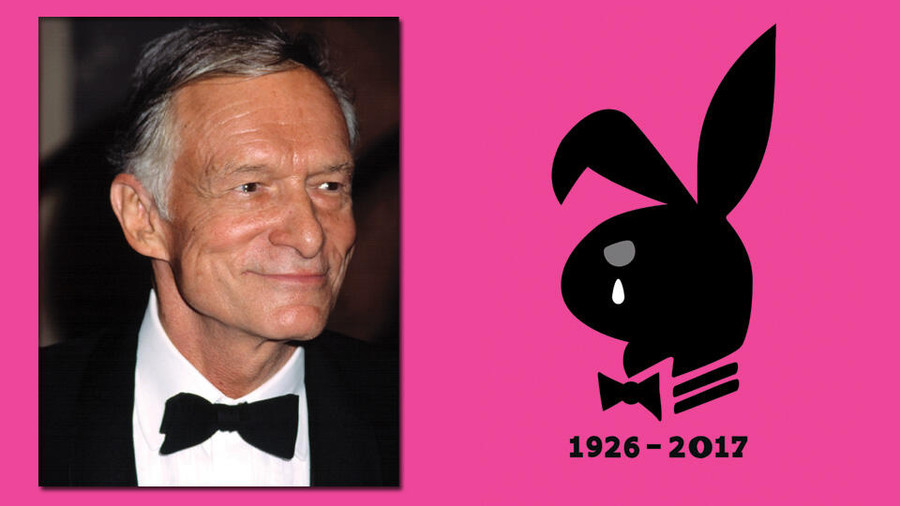
The moment when I read the news that the founder of Playboy had passed away at 91, it shocked me in a way that hurt and was hard to describe.
Losing Hefner is a big one — not just for Playboy or the adult industry, but for the world. Women loved him, men wanted to be him.
Playboy brands is one of the most recognized in the world and basically the origin of all modern pornography.
The man moved boundaries in a way that no others did, and he catapulted imitators to similar fame and fortune.
But let’s be real — Playboy brands is one of the most recognized in the world and basically the origin of all modern pornography.
Even when I met my wife she owned a Playboy mug … and something told me we would get along.
I knew Hefner only through his global brand and his numerous appearances on TV, documentaries and one “Simpsons” episode. I felt that we shared several similarities in work ethic.
He was an impressive writer, and perhaps he and I shared a little bit of lifestyle during my recent single years.
While I feel a genuine respect for his life and all he accomplished and enjoyed, the differences between us are stark and his words, “life is too short to be living somebody else’s dream,” seem fitting here.
I can’t name a single person with any true similarity to his life, nor anyone who could hold a candle to Hefner. At least, the Hefner he wanted us to see. I’m sure there are many people who would never condone of his magazine or his lifestyle, but to hell with them. His life is not anyone’s to judge.
An avid movie buff, his movie nights were often mentioned in his Twitter feed which went quiet on Sept. 19. He loved media and movies so much that he not once, but twice helped to save the iconic Hollywood sign.
First in 1970 when Hefner held a party that helped to raise the $250,000 to replace the aging Hollywood sign letters. Later, he pledged the last $1 million needed to save the land surrounding the sign as part of the total $12.5 million cost. Hefner once stated that the sign represented “dreams” and that’s exactly what his life embodied. His dream was, like every entrepreneur, for a life beyond the average.
Despite the fear of doing so, mainstream brands should recognize that porn is entertainment and that its consumers are regular people with numerous interests, much like Hefner.
These companies are willing to pay fortunes in mainstream media when there is a huge opportunity in the adult industry to reach the same people at a fraction of the cost.
The adult industry is still pushing aggressively into the boundaries of the mainstream.
One example is “Middle Men,” the 2009 movie about card processing in the porn industry. Last year, Chris Mallick, producer and former owner of ePassporte, launched a lawsuit against Paramount for doing “little” to promote the movie.
Unlike “Middle Men,” the 2013 movie “Don Jon” found an audience and actually made a healthy profit. The movie starred Joseph Gordon-Levitt, who plays a porn addict who just can’t stay away from searching for the “perfect clip” on PornHub despite landing a girlfriend played by Scarlett Johansson.
In October 2014, PornHub managed to get its “All you need is hand” billboard into Time Square. Bravo. Except, it survived only 48 hours before it was taken down.
BuzzFeed later reported that the billboard was taken down by “demand” from the Hilton DoubleTree hotel, which reportedly had full approval rights for the ads in that location.
Go figure. Family brands don’t want to be next to non-pornographic ads promoting pornography.
Back in 2015, Chris O’Connell from Mikandi was featured in a Wired magazine article about how the porn industry wasn’t the skeevy cesspool that Hollywood and fake “talent agents” would have lead the public to believe.
This past August, three additional punches were made into the mainstream media.
CamSoda submitted an open letter to the press offering a gig worth $500,000 to the recently ousted Trump Press Secretary Anthony “The Mooch” Scaramucci.
Instead of accepting it, he went on to launch his own news outlet, “The Scaramucci Post,” dedicated to the “center” of the often-mind-boggling feud between the political right and left. (Maybe the CamSoda porn gig would have been the better choice and more his forte).
Shortly after CamSoda’s stunt, xHamster’s vice president offered Netflix’s “Sense8” a third season about the highly sexual series about “polymorphous perversity.”
While I’ve never actually watched the show, I suspect fans wouldn’t really care who paid for it as long as they get more of the free entertainment they are accustomed to. A porn tube site seems like a likely partner.
During all of this, RedTube threw its hat in the ring as well, offering to sponsor the New York City red line. This proposal was brilliant, and it would effectively have people literally riding a “Red Tube.”
Even 64 years after the first Playboy issue hit newsstands in 1953, the hypocrisy of “everyone watches porn, buts its unacceptable in the mainstream” lives on.
However, the book sales and box office take of “Fifty Shades of Grey” tells a much different story about what people’s attitude towards sex and porn really is; they are curious and they like it, but people won’t always admit it. The hypocrisy lives on.
Hugh Hefner’s legacy is the adult industry. Let’s try not to fuck it up by forgetting his level of debonair.
The adult entertainment industry will never stop pushing to be accepted, and despite the hypocrisy the majority surely have already accepted the industry and his legacy.
Juicy Jay is the CEO and founder of JuicyAds, the Sexy Advertising Network. You can follow Jay on Twitter @juicyads, visit JuicyAds.com, or like on Facebook.com/juicyads.



