



In a 1971 case, Cohen v. California, the U.S. Supreme Court said “one man’s vulgarity is another’s lyric.”
That rings very true to the adult entertainment industry. On June 19, the U.S. Supreme Court reaffirmed this principle, protected the First Amendment from a politically correct onslaught and may have given the adult entertainment industry a well-deserved victory.
Today, because of a little-known band and a naughty word, you are all more free. And, that word — ‘slant’ may have once been a vulgarity. But, Simon Tam took it back today and made it all of our lyric.
This fight has been over “disparaging trademarks.” Section 2(a) of the Lanham Act allows the government to deny trademark registration to any trademark that some low-level bureaucrat decides is “disparaging” or “immoral and scandalous.”
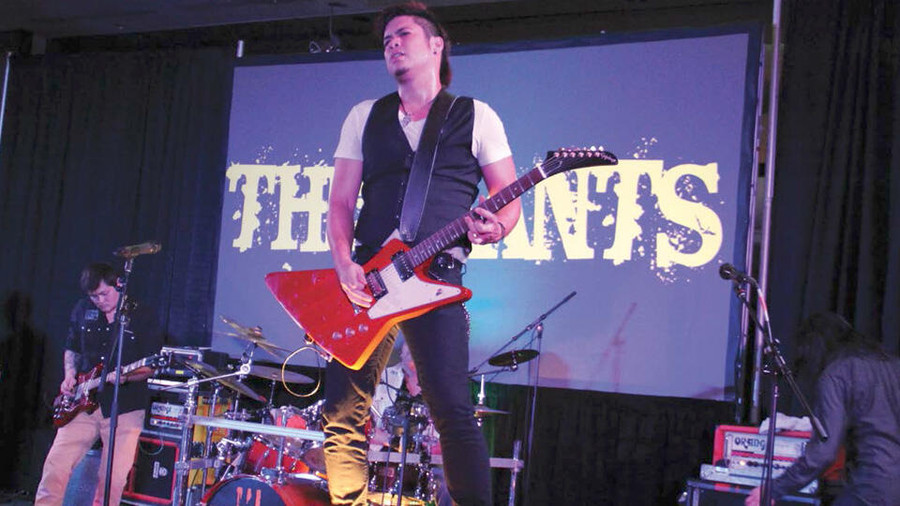
A rock band, The Slants, sought to register their name — and the U.S. Patent and Trademark Office (USPTO) rejected the registration — claiming that “Slants” is disparaging to Asian Americans.
The fact that the band is made up of proud Asian Americans was irrelevant. The fact that they meant to “reclaim” the slur was irrelevant. What was relevant was that a single bureaucrat said “wah, that’s disparaging.”
The Washington Redskins have been in a similar fight. Their long-standing trademark registration was cancelled because Native Americans petitioned a federal court to throw it out on the same grounds — they find it disparaging.
Looking at The Slants’ case, the Supreme Court agreed that this use of Section 2(a) is unconstitutional. Justice Samuel Alito, who wrote the opinion, could not have made it clearer:
“We now hold that this provision violates the Free Speech Clause of the First Amendment,” Alito wrote. “It offends a bedrock First Amendment principle: Speech may not be banned on the ground that it expresses ideas that offend.”
This decision also wipes out the Redskins’ decision — ending that team’s need to continue its appeal.
But beyond that, the court’s decision could have a great impact on the adult entertainment industry. Why, Mr. Randazza, would it so apply? Because of the immoral and scandalous clause, and some language in the case that says, “Giving offense is a viewpoint.”
Viewpoint discrimination is a serious no-no when it comes to the First Amendment. Therefore, “immoral and scandalous” trademarks should no longer be prohibited either.
Why does this matter? The adult entertainment industry frequently uses brands that have been deemed “immoral and scandalous.”
For example, Kink.com’s “fuckingmachines” property and RK Netmedia’s “Cumfiesta” were both rejected on “immoral and scandalous” grounds. Many other companies did not even try to register their marks, knowing full well that the USPTO would reject them.
Those days should now be over.
Had this gone the other way, we would have had a government mandate that if one bureaucrat — in this case from the USPTO — finds your speech to be offensive, the force of the entire federal government may use its weight to suppress your speech.
The trademark office argued that granting trademark registration was tantamount to the government actually speaking — and thus it should not have to be forced to speak in a way that it disapproves of.
But, trademark registration is an important benefit. Under the unconstitutional conditions doctrine, the government may not condition the availability of a government benefit on an individual’s agreement to surrender a constitutional right. The government cannot transform private speech into government speech by merely having some government involvement in the speech.
The Supreme Court ruled that “if the federal registration of a trademark makes the mark government speech, the federal government is babbling prodigiously and incoherently.”
After all, the trademark register has millions of trademarks on it — the federal government can’t be saying all those things at once.
Had this case gone the other way, the implications would have been grim for the adult entertainment industry, and not just in the trademark context. This would have given the government the ability to deny copyright protection to pornography. Some academics have called for just that.
Worse yet, the denial of copyright protection could have denied American made porn its right to being protected, but our international treaties would have required us to protect foreign-made productions.
This was the case in Taiwan recently. Taiwan refuses to grant copyright protection to pornography, but since Taiwan is a signatory to the TRIPs agreement, it cannot discriminate on the basis of content — when it comes to foreign productions. The U.S. is a TRIPs member too.
Therefore, porn shot in Tijuana would get full copyright protection. Porn shot right over the border in San Diego could have been excluded.
This case reaffirms that the First Amendment demands viewpoint neutrality under the law.
As Justice Anthony Kennedy said in his concurrence: “In the realm of trademarks, the metaphorical marketplace of ideas becomes a tangible, powerful reality. To permit viewpoint discrimination in this context is to permit government censorship.”
Today, because of a little-known band and a naughty word, you are all more free. And, that word — “Slant” may have once been a vulgarity. But, Simon Tam took it back today and made it all of our lyric.
And with that, the adult entertainment industry should be reassured today – their intellectual property rights are fully protected.
For a more detailed discussion of the issues in this article, download Randazza’s law review article on intellectual property and morality. Randazza, Marc J., Freedom of Expression and Morality Based Impediments to the Enforcement of Intellectual Property Rights (Jan. 16, 2016). Nevada Law Journal, Vol. 16, No. 1, 2016. Available at SSRN — https://ssrn.com/abstract=2716892
Marc J. Randazza is a Las Vegas-based First Amendment attorney and managing partner of the Randazza Legal Group. Follow him on Twitter: @marcorandazza. His academic writing can be found at marcrandazza.academia.edu.



