



Earlier this month, I met with the Free Speech Coalition’s board of directors for our annual review. Despite the headwinds our industry faces, politically and economically, we are, as an organization, on firmer footing than we have been in years.
In the past year, we’ve stabilized our balance sheets, reduced our expenditures and paid down debt — all while battling a major statewide ballot initiative.
We are facing at least 27 different bills that would require porn filters on computers, tablets and phones sold in the U.S. More than 20 more seek to declare porn a ‘public health crisis.’
We also added 50 new members, and seen existing members increase their support. But we’ve got a long way to go, and if this industry is going to not only survive, but thrive, we’ll need the help of our entire community.
The Free Speech Coalition history goes back to 1991, more than 25 years ago. That may seem like a long time — the business was still mostly VHS tapes and magazines — but there are important parallels between then and now worth noting.
We were formed in the aftermath of more than 30 raids on adult businesses in the U.S., in 1990. Nearly all major manufacturers were indicted, threatened with criminal charges and seizure of assets.
Imagine today if the heads of the industry’s 30 largest companies were suddenly arrested, and you’ll get a sense of what an earthquake that was.
In prior busts — such as the 1987 Reagan-era roundup of major adult distributors — individual companies fought their cases on their own. Some prevailed, but others were sent to prison, had their businesses seized, or fled the country. We were a competitive industry back then, if a major producer was arrested, it could be a lucrative opening in market share for their competitors.
The 1990 Bush raids changed that, and the mass busts demonstrated the weaknesses of going it alone. To battle those charges, the Free Speech Legal Defense Fund (FSLDF) was born and a number of industry lawyers — many working pro bono — successfully fought off prison sentences for all but one of the producers.
Those victories showed us what was possible if we stick together. We used that organization to improve testing, to fight for the rights of talent and to fight legislative initiatives hostile to our industry. We became the Free Speech Coalition.
Those victories also showed law enforcement and conservative moralists that we were a force to be reckoned with, and that if they battled one of us they’d have to battle all of us. That they couldn’t depend on us turning on one another, or turning a blind eye.
I bring all this up because today, while we have pulled off some improbable victories, we’re still underfunded and understaffed.
We are facing at least 27 different bills that would require porn filters on computers, tablets and phones sold in the U.S. More than 20 more seek to declare porn a “public health crisis.”
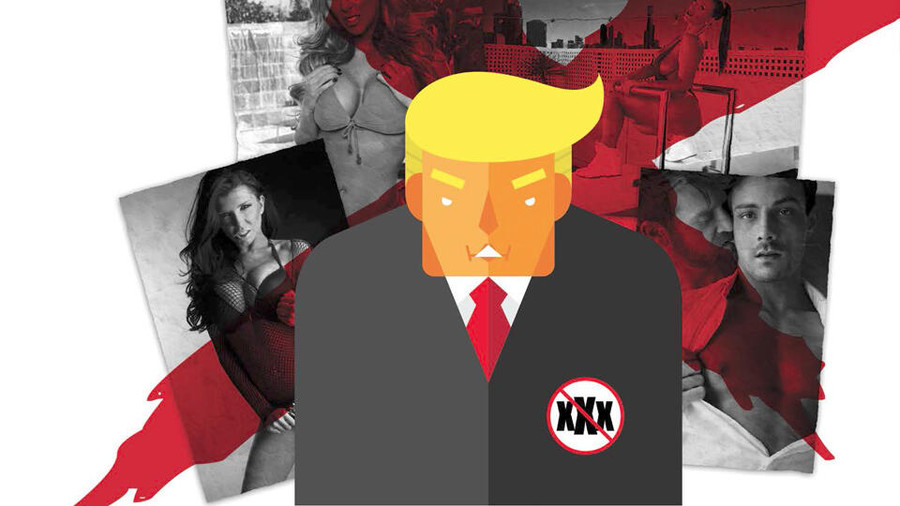
We have a president believes that pornography isn’t protected by the First Amendment, and who isn’t particularly concerned by what established law has said or free principles of the internet.
Here Are Some Important Questions to Ask Ourselves:
• If the industry was faced with mass raids, with assets frozen and owners arrested, would we have the ability to successfully fight it?
• If the federal government instituted draconian internet regulations, or cut off access to adult sites, would we have the resources to stop it?
• If banks were again pressured to stop lending to adult business, or credit card processors were forced to drop us en masse, how many of us would survive?
• If pleasure products were banned in the U.S. mail, would we have the resources to overturn it?
Now is not the time for us to take chances. We are a lean and efficient organization, but we have to grow to meet our challenges. And no matter what your political orientation, it’s undeniable that our legal challenges grow exponentially under conservative administrations.
We’ve added dozens of new members to our rolls this year, but dues paying members are only a fraction of the industry. If you’re reading this, we need you on board. It doesn’t have to be much — our entry level membership is just five dollars a month — but multiplied by thousands it allows us to prepare for the battles ahead.
The more united we are, the stronger we are. And the stronger we are, the better we can educate our members, fight legislation, lobby regulators, prepare legal defenses, and connect with like-minded organizations like the American Civil Liberties Union, the Electronic Frontier Foundation and Lambda Legal.
But we can’t do it without you. #UnitedWeStand.
Eric Paul Leue is the executive director of the Free Speech Coalition.



